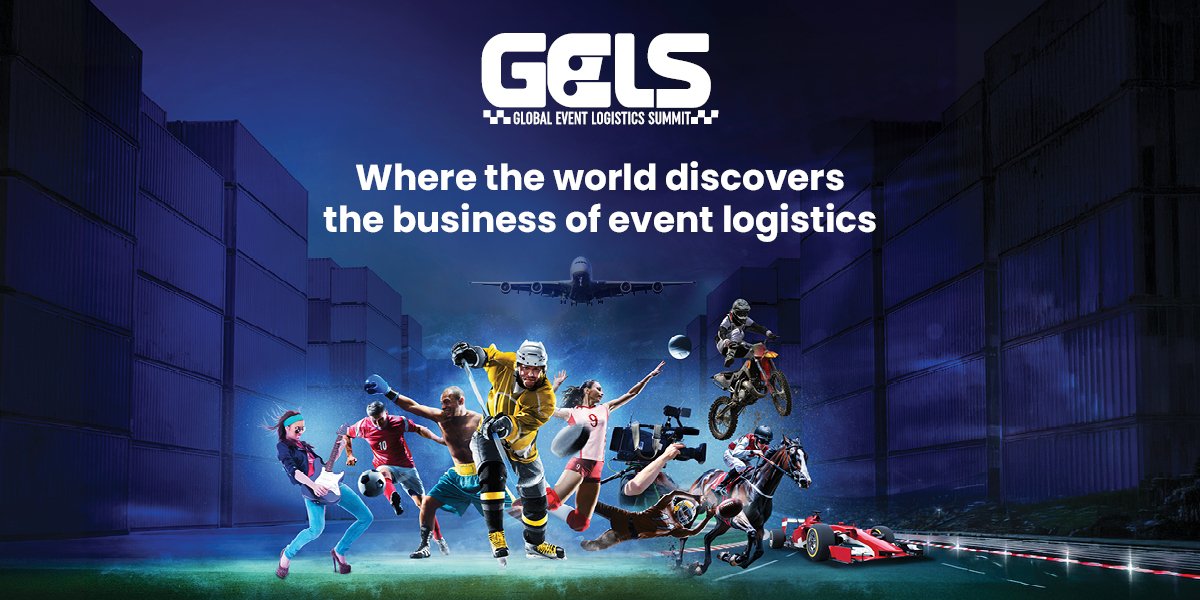
From Formula 1 circuits to world tours and championship arenas, the world’s most-watched events rely on a powerful, precise, and often invisible ecosystem: event logistics. As global productions scale up, the movement of people, equipment, technology, and project cargo has become a defining factor in whether an event succeeds or collapses under pressure.
At the Global Event Logistics Summit (GELS) 2026, we bring together the very stories, challenges, and innovations shaping this high-stakes industry, one message stands out clearly: behind every iconic moment on the field or stage is a logistics team racing against time.
In motorsport, the logistical sprint is just as intense as what happens on the circuit. Stories like CEVA Logistics powering Ferrari’s Formula 1 operations show how teams manage complex routing, multimodal freight, and last-minute adjustments across continents.
Whether it’s moving 40 tonnes of equipment overnight or simulating crisis events to avoid delays, sports logistics today demands precision, sustainability, and rapid coordination.
Major music tours now operate like complex international supply chains. From stadium-scale productions to multi-week global residencies, live entertainment logistics has transformed into a specialised discipline involving air freight, multimodal transport, staging gear, audio-visual systems, lighting rigs, and other highly sensitive equipment.
A strong example is Coldplay’s Music of the Spheres World Tour, where DHL serves as the official logistics partner. The scale is enormous: custom-built stages, kinetic lighting, renewable-energy setups, and tonnes of touring equipment move seamlessly from one continent to another. DHL’s integrated approach, combining air, sea, and road freight, ensures that every piece arrives with precision, whether it’s a time-critical console or sustainable tour infrastructure.
This is project cargo with showtime pressure, where missing a single crate can stall an entire performance. As touring calendars tighten and sustainability targets rise, the industry now depends on two things: early planning to engineer predictability and last-minute problem-solving to handle the unexpected.
Live entertainment isn’t just about moving artists, it’s about moving an entire travelling universe under unforgiving deadlines, and logistics partners are increasingly the unseen headliners making it all possible.

Global expos, championship tournaments, and corporate gatherings rely on months of planning supported by technology, simulation, and multimodal transport.
Digital twins, AI-driven scheduling, green logistics, and integrated mobility strategies are now at the centre of how large-scale events move seamlessly from one venue to the next. These developments reflect the growing need for smarter, cleaner, and more resilient event logistics frameworks worldwide.
GELS 2026 serves as the global platform where the lessons behind these operations converge. The summit highlights the realities faced by logistics providers, event organisers, freight specialists, and technology innovators, especially when stakes are high and timelines are unforgiving.
From last-minute rerouting to cross-border coordination, from project cargo planning to sustainable mobility solutions, GELS examines how the world’s biggest events come to life long before audiences arrive.
As the demand for mega-events continues to grow, so does the importance of understanding and strengthening the logistics that power them.
GELS 2026 will showcase these insights, celebrate the industry’s operational excellence, and chart the path forward for a smarter, more collaborative global event logistics ecosystem.